
Workholding and Clamping.
The Foundation of
Stable CNC Machining.

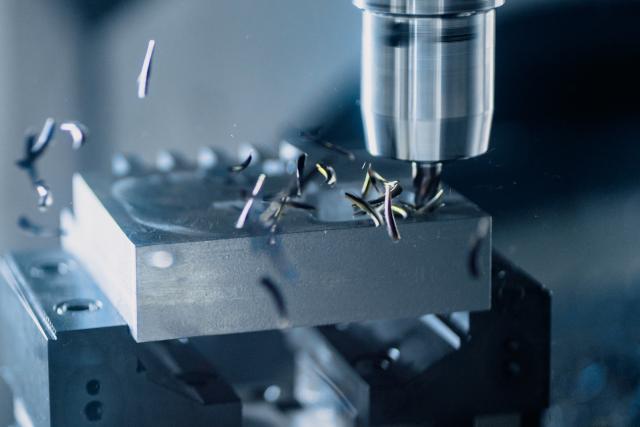
Workholding and clamping is what keeps every part exactly where it should be while the cutting forces try to move it. If the workpiece moves, vibrates or is difficult to access, you see it immediately in surface finish, tolerances and cycle time.

Modern workholding and clamping systems give you rigid, repeatable and flexible setups for milling, turning, grinding and 5-axis machining. From simple vises to advanced hydraulic clamping and zero-point systems, the goal is the same: secure clamping, faster changeovers and more productive spindle time.

Why workholding & clamping matters.

For the Hands-On Operator
 
Less vibration and chatter in tough cuts
Easier, safer clamping with clear, repeatable systems
Better access for tools, especially in 5-axis machining
 
For the Operational Optimizer
 
Shorter setup and changeover times
Higher process stability and fewer “mystery” quality issues
A more robust basis for automation and unmanned shifts
 
For the Strategic Owner
 
Better utilisation of existing machines
Lower scrap and rework on high-value parts
A clamping strategy that supports long-term competitivenes

Stationary workholding for milling and 5-axis.

For vertical, horizontal and 5-axis machining centres, vises and modular workholding systems secure the part while keeping as many sides accessible as possible. Typical solutions include:


5-axis and centric vises

Compact 5-axis vises and centric vises are designed for 5-sided machining with:
 
Very high holding forces, even at low clamping pressure
Form-fit clamping on a small clamping depth (around 3 mm) for blanks
Low interference contours for optimal tool access around the part
 
They can be mounted directly on the machine table, on rotary tables, risers, tombstones or pallets, making them highly flexible for different machine types and part sizes.


Conventional vises and clamping devices

For pre-machined and round components, conventional vises and contour clamping systems offer smooth clamping without pre-stamping, using exchangeable jaws and contour jaws for difficult shapes.

Workholding for turning and grinding.

On lathes, mill-turn centres and grinding machines, chucks and expanding systems are key to secure, precise clamping:

Power chucks for heavy-duty machining of discs and bar components, combining high clamping force with high precision
Air and diaphragm chucks for high-precision turning and grinding with repeatability around 0.002 mm TIR, often hermetically sealed for abrasive environments
Expanding collet systems that clamp on internal diameters for shafts, hubs and complex components
Special shaft chucks that allow total turning between centres over the full length, reducing handling and improving concentricity
 
These systems support both conventional turning machines and advanced multi-axis equipment

Hydraulic, pneumatic and mechanical clamping elements

Beyond standard vises and chucks, clamping elements and power workholding turn fixtures into productive, semi-automatic systems:

Hydraulic swing clamps, block cylinders, work supports and fixture clamps for machining centres
Compact power workholding devices designed for high clamping pressures (up to around 7,500 psi) to secure parts under heavy cutting loads
Magnetic, electric and mechanical clamping modules for moulds, dies and presses, with accessories such as valves, pumps and couplings
 
Compared to manual bolting, power workholding significantly reduces manual effort, improves repeatability and opens the door to more automated operations.


Zero-point clamping and quick change systems

Zero-point clamping systems create a defined, repeatable interface between the machine table and fixtures, pallets or vises:
 
Pneumatic or hydraulic zero-point plates with integrated clamping bolts
Repeatability in the micron range for pallet and fixture changes
Very short changeover times between jobs, with fixtures prepared offline
 
Combined with 5-axis vises, risers and tombstones, zero-point systems allow operators to switch from one part family to another in minutes rather than hours, supporting both small batch flexibility and higher machine uptime

Workholding across the full process chain.

Modern workholding and clamping covers the full journey from raw blank to finished part:

Blank clamping: form-fit clamping of rough parts with stamping technologies that reduce required clamping pressure and prevent deformation
Pre-machined and round parts: conventional vises, contour jaws and rotary workholding for stable finishing
Large and heavy components: special fixturing, hydraulic clamping and handling
devices for rotating, tilting and moving heavy workpieces safely
 
This integrated view helps production managers and owners build a clamping strategy that supports both today’s jobs and tomorrow’s investments.


Workholding and clamping solutions from Duroc Machine Tool

Duroc Machine Tool operates in seven markets, supplying machining solutions, tools, service and support to manufacturing companies across the Nordic and Baltic regions.
 
Within workholding and clamping, we can help you with:
 
Vises and workholding systems for 3-axis, 4-axis and 5-axis machining
Chucks and special workholding for turning, multi-tasking turning centers and grinding
Hydraulic, pneumatic and mechanical clamping elements for fixtures and presses
Zero-point clamping and quick-change concepts for faster, more flexible setups
Application support to connect workholding, machines, tools and automation into one coherent solution

Ready to review your workholding setup?

If you struggle with vibration, access problems, long changeovers or inconsistent quality, your workholding and clamping may be limiting your performance.

Søren Gerber

Group CEO


+45 21 39 11 19

soren.gerber@duroc.com